Perimenopause and Menopause Protein: How Much Do You Need?
As oestrogen falls, muscle gets harder to keep. Here’s how much protein women need in perimenopause, and the easiest ways to actually eat it.
In this guide
Somewhere in your forties, the rules seem to change. The same meals, the same routine and the same amount of exercise stop producing the same results. You might notice your clothes fitting differently, stairs feeling harder, or that you’re simply more tired than you used to be. Welcome to perimenopause, the years of hormonal change that lead up to the menopause.
There’s a lot of noise online about what to eat through this stage. But if there’s one change the research keeps coming back to, it’s this: protein matters more now than it did before.
Why protein matters more in perimenopause
Oestrogen does far more than most of us were taught. Among other things, it plays a part in how your body builds and maintains muscle. As oestrogen levels fall through perimenopause and menopause, research shows women tend to lose muscle mass and strength more quickly than before. Muscle isn’t just about how you look. It’s what carries your shopping, gets you up off the floor and keeps you steady on your feet for decades to come.
Protein contributes to the maintenance of muscle mass and to the maintenance of normal bones. Pair it with strength training, which the evidence also strongly supports for women at this stage, and you’re giving your body the two things it needs most.
How much protein do you need after 40?
UK guidelines set the baseline at 0.75g of protein per kilogram of body weight per day. For a 65kg woman, that’s about 49g. But that figure is a minimum to avoid deficiency, and it hasn’t been updated since 1991.
Many experts now argue that older adults need more. An international expert group, PROT-AGE, recommends 1.0 to 1.2g per kilogram per day for people over 65 to help preserve muscle, and more for those who are active. For that same 65kg woman, that’s 65 to 78g a day. Many specialists in women’s health suggest aiming towards these higher figures through perimenopause, rather than waiting until later life.
Daily protein for a 65kg woman
So here’s a question worth sitting with: if you added up yesterday’s protein, would you get anywhere close?
The problem: protein is harder to eat than it sounds
Most women in perimenopause aren’t falling short because they don’t care. They’re falling short because hitting 70g of protein a day takes real effort. A chicken breast gives you around 30g. An egg, about 6 or 7g. A pot of yoghurt, 5 to 10g. To hit your target, you’d need protein at every single meal, plus snacks, every day.
And there’s a common misunderstanding that makes it even harder. A 500g pack of beef mince doesn’t contain 500g of protein. It contains about 100g, because raw mince is only around 20% protein. The weight on the pack is the weight of the food, not the protein inside it. Many of us think we’re eating plenty when we’re actually well short.
Where bone broth fits in
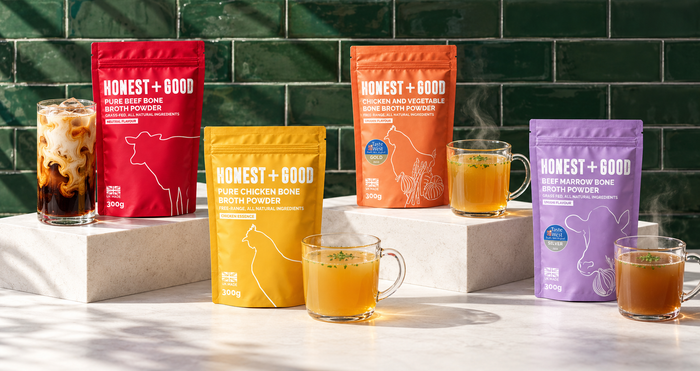
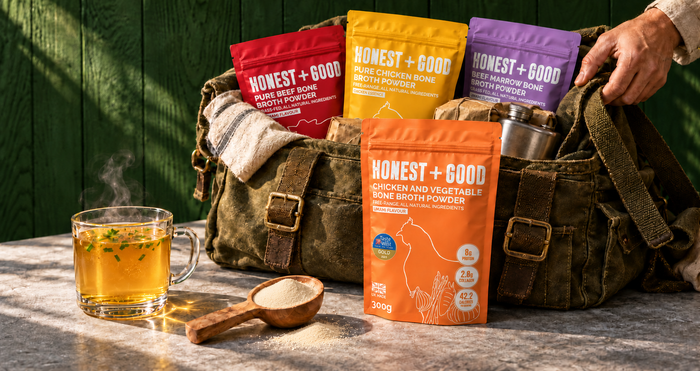
This is where a protein-dense broth earns its place. Pure Beef is 96% protein. One 10g tablespoon gives you 9.6g of protein, more than you’d get from an egg. It has a neutral flavour, so it disappears into things you’re already having:
- Your morning coffee. If you’re not a breakfast person, this is the easiest win there is. Stir a spoonful into a splash of hot coffee, then top up.
- Smoothies and porridge. Add a tablespoon and you won’t taste it.
- Soups, sauces and stews. Stir it into a bolognese or curry for the whole family.
- A savoury mug in the afternoon. When 4pm hits and the biscuit tin is calling, a warm mug of Beef Marrow is a savoury, protein-rich alternative.
Two tablespoons through the day adds almost 20g of protein, without cooking a single extra meal.
A protein-first day in perimenopause
Here’s what an easy, realistic day might look like:
| When | What | Protein | Running total |
|---|---|---|---|
| Morning | Coffee with a tablespoon of Pure Beef, two eggs on toast | about 27g | 27g |
| Lunch | Chicken salad, or a tin of mackerel on crackers | 25–30g | 52–57g |
| Afternoon | A mug of Pure Beef broth and a handful of nuts | about 15g | 67–72g |
| Dinner | Salmon, tofu or lean meat with vegetables | 25–30g | 92–102g |
That clears the 70g mark with room to spare, and you’re already past halfway by lunchtime, thanks to a spoonful in your coffee.
What to look for in a protein boost
Not every protein product suits this stage of life. Many protein powders are sweet, artificially flavoured and full of sweeteners, which can feel like a lot if you’re trying to cut down on sugar. Look for:
- Savoury, not sweet. Protein you can add to real food, not just shakes.
- A short ingredient list. Our Pure Beef is simply beef bone broth.
- No added salt, especially if you’re keeping an eye on your blood pressure.
- Grass-fed, pasture-raised beef, from farms that look after their animals.
Frequently asked questions
Does protein help with perimenopause symptoms?
Protein isn’t a treatment for hot flushes or other symptoms, and you should speak to your GP about those. What protein does is help maintain your muscle and bones, which matters more as oestrogen falls.
Is it better to spread protein through the day?
Research suggests spreading protein across meals, rather than saving it all for dinner, helps your body use it. That’s why a protein-rich breakfast is such an easy place to start.
Can I just use a protein shake?
You can, but if sweet shakes aren’t your thing, a savoury broth gives you protein in the foods you already eat, without the sweeteners.
The bottom line
Perimenopause is the time to put protein first. You don’t need to overhaul your diet or eat five chicken breasts a day. Small, easy additions, like a spoonful of broth in your coffee, add up to a real difference over a week, a month and a year.
Mix and match any pouches and save up to 15%.
Related reading
- High-protein foods that aren’t chicken
- Bone broth benefits: why it deserves a place in your diet
- High-protein breakfast ideas without eggs
Sources & further reading