Magnesium for Sleep: Why It's Part of So Many Evening Routines
Magnesium has become the evening ritual of choice. Here's what it does in the body, when to take it, and how to build an evening that helps you wind down.

In this guide
If you’ve searched for magnesium recently, you’ll have noticed one word that follows it everywhere: sleep. Magnesium for sleep. Best magnesium for sleep. Sleepy girl mocktails with magnesium powder stirred in.
So why has magnesium become the evening supplement of choice? Here’s what it does, and how to make it part of a better wind-down.
What magnesium does
Magnesium is an essential mineral involved in how your nervous system works. It contributes to:
- Normal functioning of the nervous system
- Normal psychological function
- The reduction of tiredness and fatigue
- Normal muscle function
It’s easy to see why so many people make it part of the end of their day. Researchers are also continuing to study magnesium and sleep, including a review of trials in older adults.
So why do so many people take it at night?
Because magnesium supports the nervous system, it fits naturally into the end of the day. Keep it next to your toothbrush and it becomes part of getting ready for bed.
That routine matters. Ask yourself: what does the last hour of your day look like? For most of us, it’s a phone, a bright screen and a mental to-do list. A small, consistent ritual can be a signal to the body that the day is ending.
Building a better evening
Whatever you take, these habits form the foundation of a good wind-down:
- Keep a regular schedule. Going to bed and getting up at similar times each day.
- Dim the lights. Lower lighting in the hour before bed.
- Put the phone down. Or at least leave it on the other side of the room.
- Watch the caffeine. Cut back from the afternoon onwards.
- Go easy on alcohol. It may make you drowsy, but it often disrupts sleep later in the night.
- Find something warm and savoury. If you get peckish after dinner, a mug of broth can be a gentle alternative to biscuits.
An easy evening, hour by hour
Your last coffee or tea with caffeine.
Peckish? A warm mug of broth instead of biscuits.
Dim the lights and put the phone on the other side of the room.
Your magnesium, kept right next to the toothbrush.
Lights out. A regular bedtime is the foundation of the lot.
Getting enough magnesium
Magnesium is an essential mineral, and many of us don’t eat as many magnesium-rich foods as we could. Adults need around 270–300mg a day, which you can get from leafy greens, nuts, seeds, beans and wholegrains. If your diet falls short, a supplement is one way to top up. The NHS says 400mg or less a day from supplements is unlikely to cause harm.
Our magnesium
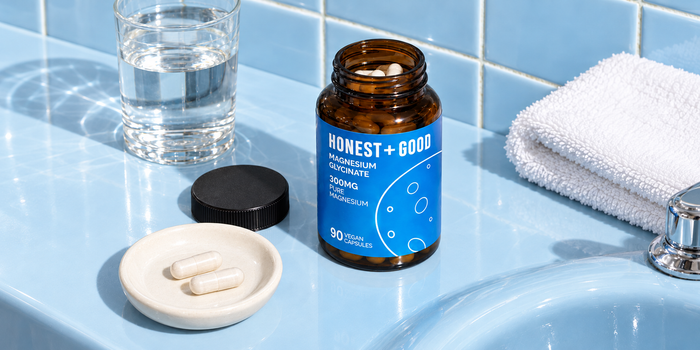
Our Magnesium Glycinate capsules give you 300mg of elemental magnesium in a two-capsule serving (80% of the daily reference intake), bound to glycine, in a vegetarian capsule with no fillers and no silicon dioxide. We suggest taking it in the evening, simply because it fits so naturally into a wind-down routine.
If you have ongoing trouble sleeping, speak to your GP. Persistent insomnia is worth getting properly checked.
Questions people ask
Why do people take magnesium before bed?
Magnesium contributes to normal functioning of the nervous system and normal psychological function, which is why many people make it part of their evening routine.
When should I take magnesium?
Any time that suits you. Many people prefer the evening as part of their routine.
Is magnesium good for anxiety?
Magnesium contributes to normal psychological function. If you’re struggling with anxiety, please speak to your GP.
How much magnesium should I take?
Adults need 270–300mg a day from all sources. The NHS says 400mg or less a day from supplements is unlikely to cause harm.
Part of your evening routine
Magnesium Glycinate: 300mg of elemental magnesium per serving, contributing to normal functioning of the nervous system and the reduction of tiredness and fatigue.
Related Reading
- The 9pm ritual (The Broth Kitchen)
- Winter warmer drinks that aren’t hot chocolate
- Bone broth benefits: why it deserves a place in your diet
Sources & Further Reading