Best Iron Supplement UK: Bisglycinate vs Ferrous Sulphate
Ferrous sulphate, fumarate or bisglycinate? Here’s how to choose the best iron supplement in the UK, what elemental iron means, and how to take iron with vitamin C, tea and coffee.
In this guide
Stood in the supplement aisle staring at a wall of iron? Ferrous sulphate, ferrous fumarate, gluconate, bisglycinate… it reads like a chemistry exam you didn’t revise for.
And if you’ve ever tried an iron tablet before, you might remember how it went. A funny tummy. A trip to the loo that didn’t happen. A tablet the size of a horse pill. Sound familiar?
Here’s the plain-English guide to choosing the best iron supplement in the UK: what the numbers on the label really mean, which forms are which, and how to take iron so you get the most from it.
Why iron matters
Iron is one of those quiet workers your body relies on every single day. Iron contributes to the normal formation of red blood cells and haemoglobin, and to normal oxygen transport in the body. It also contributes to the reduction of tiredness and fatigue, normal cognitive function, normal energy-yielding metabolism and the normal function of the immune system.
So if you’re dragging yourself through the 3pm slump, it’s worth asking: am I actually getting enough?
Elemental iron: the number that really counts
This is the bit most labels don’t make easy. When a tablet says “200mg ferrous sulphate”, that’s the weight of the whole iron salt, not the iron itself. According to the official UK product information for ferrous sulfate 200mg tablets, each one is equivalent to 65mg of ferrous iron.
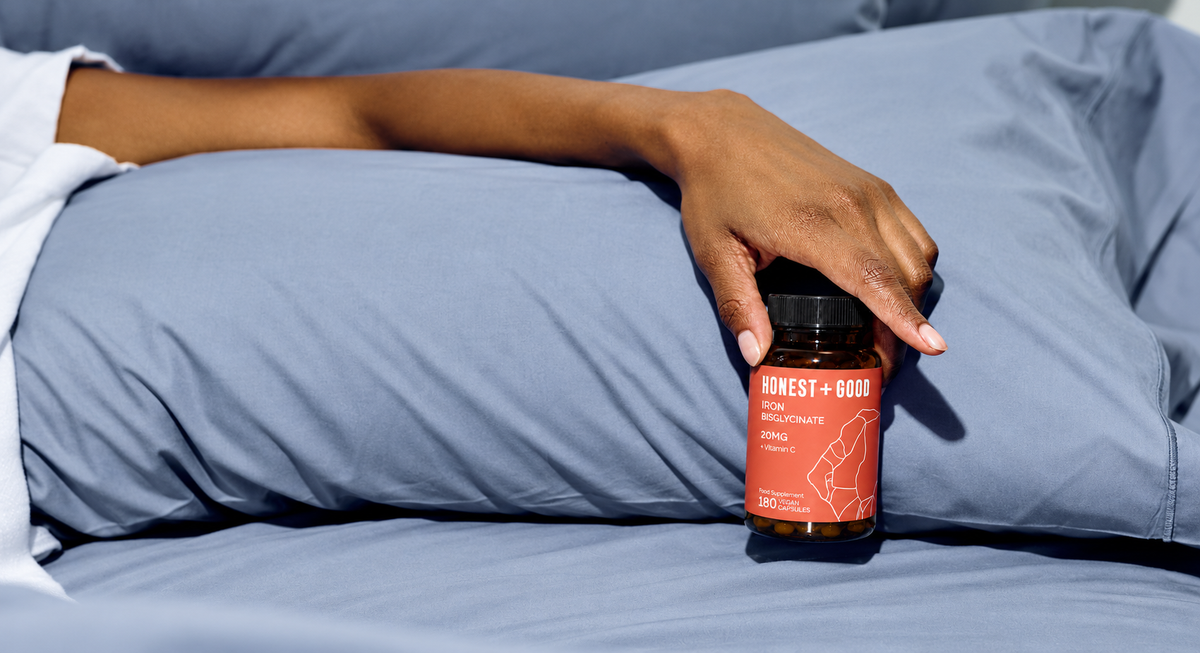
The iron your body can use is called elemental iron. So always look for that figure. On our Iron Bisglycinate + Vit C, it’s right there on the front: 20mg of iron per capsule, which is 143% of the NRV (the daily nutrient reference value). No maths needed.
The common forms of iron, explained
- Ferrous sulphate – the classic iron salt. Cheap, widely prescribed and often sold as a big 200mg tablet.
- Ferrous fumarate – another iron salt, usually sold as a tablet.
- Ferrous gluconate – a third iron salt you’ll spot on pharmacy shelves.
- Iron bisglycinate – iron bound to the amino acid glycine. This is the one people mean when they talk about “gentle iron”.
| Ferrous sulphate | Ferrous fumarate | Iron bisglycinate (ours) | |
|---|---|---|---|
| What it is | Iron salt | Iron salt | Iron bound to the amino acid glycine |
| Label clarity | 200mg tablet = about 65mg actual iron | Salt weight often listed first | 20mg iron per capsule, stated clearly (143% NRV) |
| On the stomach | Nausea, constipation and diarrhoea are listed as common side effects | An iron salt, like sulphate | A research review reported far fewer tummy troubles than iron salts |
| Vitamin C built in | No | No | Yes – 100mg per capsule |
| Format | Tablet | Tablet | Vegan capsule |
| Pack | Often 28 tablets | Varies | 180 capsules – 6 months at 1 a day |
Iron bisglycinate vs ferrous sulphate: why gentle iron is so popular
Let’s be honest. The number one reason people give up on iron is their stomach. The NHS lists nausea, constipation and diarrhoea as common side effects of ferrous sulphate. Not exactly a fun daily ritual.
That’s why bisglycinate has become the go-to “gentle iron supplement”. A 2023 systematic review and meta-analysis of 17 randomised controlled trials, published in Nutrition Reviews, compared ferrous bisglycinate with other iron supplements. In pregnant women, the researchers reported higher haemoglobin with bisglycinate and around 64% fewer gastrointestinal side effects than with other iron supplements.
In other words, what studies report is simple: same mineral, much kinder ride. Which would you rather take every day?
Should I take iron with vitamin C?
Yes, and here’s why. Vitamin C increases iron absorption. Even the NHS says a doctor or pharmacist may suggest taking ferrous sulphate with orange juice or a vitamin C supplement.
So with most iron tablets, you’re left juggling a glass of juice or a second pill. With ours, you don’t have to. Every capsule has 100mg of vitamin C built in, which is 125% of the NRV. Iron and its best mate, in one go.
When to take iron tablets (and when not to)
Iron is a bit fussy about its company. The NHS says ferrous sulphate works best on an empty stomach, and advises a 2-hour gap from tea, coffee, eggs and dairy. The official product information for ferrous sulfate also lists calcium and antacids as things that reduce iron absorption, and says not to take iron within one hour before or two hours after them.
Here’s an easy routine:
One capsule a day, ideally first thing or between meals, or as recommended by your GP.
No need to chase it with orange juice. The 100mg of vitamin C is already in the capsule.
Leave about two hours between your iron and tea, coffee, milk or dairy.
Taking a calcium supplement or indigestion remedy? Keep them a couple of hours apart from your iron.
Capsule or tablet?
Big, chalky iron tablets are nobody’s favourite thing to swallow. Ours is a capsule, not a tablet. One a day, done.
Is there a vegan iron supplement?
Yes. Our Iron Bisglycinate + Vit C comes in a vegan capsule, so it suits plant-based eaters too. Pair it with plenty of iron-rich foods like beans, lentils, leafy greens and fortified cereals, and you’ve got a solid routine.
Taking iron safely
A few grown-up rules:
- Don’t take more than the recommended dose on the pack.
- Keep iron out of sight and reach of children. The NHS warns that an iron overdose may be fatal, and UK product information says iron overdose is particularly dangerous for young children.
- If you think you might be low in iron, are pregnant, or want to give iron to a child, speak to your GP or pharmacist first. Only a blood test can tell you what’s really going on.
- If you take other medicines, check with your pharmacist that iron is fine alongside them.
Questions people ask
What is the best iron supplement in the UK?
The best one is the one you’ll actually take every day. Look for a clear elemental iron figure, a gentle form like bisglycinate, and vitamin C to increase iron absorption. Ours ticks all three in one vegan capsule.
Is iron bisglycinate better than ferrous sulphate?
A 2023 meta-analysis of randomised trials reported that ferrous bisglycinate caused around 64% fewer gastrointestinal side effects than other iron supplements in pregnant women, alongside higher haemoglobin. That’s why it’s the go-to gentle option.
Should I take iron with vitamin C?
Yes. Vitamin C increases iron absorption. Our capsules have 100mg vitamin C built in, so there’s nothing extra to take.
When is the best time to take iron tablets?
On an empty stomach, with a two-hour gap from tea, coffee, eggs and dairy. Many people find first thing in the morning easiest to remember.
How much elemental iron is in 200mg ferrous sulphate?
About 65mg. UK product information states a 200mg ferrous sulfate tablet is equivalent to 65mg ferrous iron.
Can I drink coffee after taking iron?
Best to wait. NHS advice is to leave a 2-hour gap between iron and tea or coffee.
Is there a vegan iron supplement?
Yes. Honest + Good Iron Bisglycinate + Vit C comes in vegan capsules.
Our pick
Our Iron Bisglycinate + Vit C gives you the gentle bisglycinate form and 100mg vitamin C in every single capsule. 20mg iron (143% NRV), one capsule a day, in a vegan capsule. And with 180 capsules in the pot, that’s six months sorted. No juggling juice, no horse pills, no endless reorders.
Shop Iron Bisglycinate + Vit C →
Building a little daily routine? Browse all our supplements.
Related Reading
- Magnesium glycinate benefits
- Protein in perimenopause
- High-protein foods that aren’t chicken
- Bone broth benefits
Sources & Further Reading