How to choose the best bone broth powder?
Two things on the back of the pack tell you most of what you need to know about a bone broth: the protein per 100g and the ingredients list. Both are required by law, both are in the same place on every product, and together they take about thirty seconds to read.
In this guide
Two things on the back of the pack tell you most of what you need to know about a bone broth: the protein per 100g and the ingredients list. Both are required by law, both are in the same place on every product, and together they take about thirty seconds to read.
Why the front of the pack isn't enough
The front is where the nice words live. "Slow-cooked". "Nourishing". "Rich". None of those has a number attached.
The back is where the numbers are. Once you know where to look, you can compare any two broths in a shop aisle without anyone telling you what to think.
Five checks
1. Protein per 100g. Almost all packaged food in the UK shows nutrition per 100g or 100ml, which makes products comparable. Protein is the best single clue to how much real broth is in the pack. For a powder, a high figure means it is mostly broth. A low one means something else is making up the weight.
2. The ingredients list, in order. Ingredients are listed by weight, biggest first. Ask two questions. Is bone broth the first thing on the list? And how long is the list after it?
3. The extras. Some are there for flavour, such as herbs, vegetables and salt. Some are there for texture or cost: starches like cornflour, maltodextrin, thickeners and gums, anti-caking agents, "flavourings". None of these is dangerous. They are simply not broth, and you're paying broth prices for them.
4. Salt per serving. Seasoned broths can be salty. Check the salt figure for the serving you'd really have, not only per 100g.
5. The serving size. "10g of protein per serving" means little until you know the serving. Two products can make the same claim with very different scoop sizes. Go back to per 100g to compare fairly.
Powder against liquid
Liquid broth in a carton or pouch is mostly water, which is what makes it liquid. That's not a criticism, but it does mean the protein per 100ml will look small next to a powder. Compare them per mug: what one serving gives you, and what one serving costs.
Try it on ours
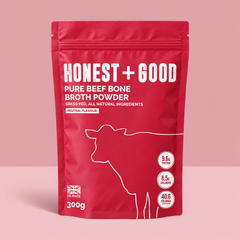
We'd be poor sports if we didn't go first. Here is Pure Beef next to two liquid beef bone broths sold in UK supermarkets, using the figures on their own labels in October 2026.
| Honest + Good Pure Beef | Liquid bone broth in a carton | |
|---|---|---|
| Protein per 100g | 96g | 3.6g to 4.9g |
| First ingredient | Beef bone broth (99.8%) | Water, then bones |
| Everything else | Sunflower lecithin (0.2%), which helps it mix | Bones, vegetables, herbs, salt and, in one, yeast extract and colour |
| Number of ingredients | 2 | 11 or more |
| Added salt or seasoning | None | Yes. 0.6g to 0.9g of salt per 100g |
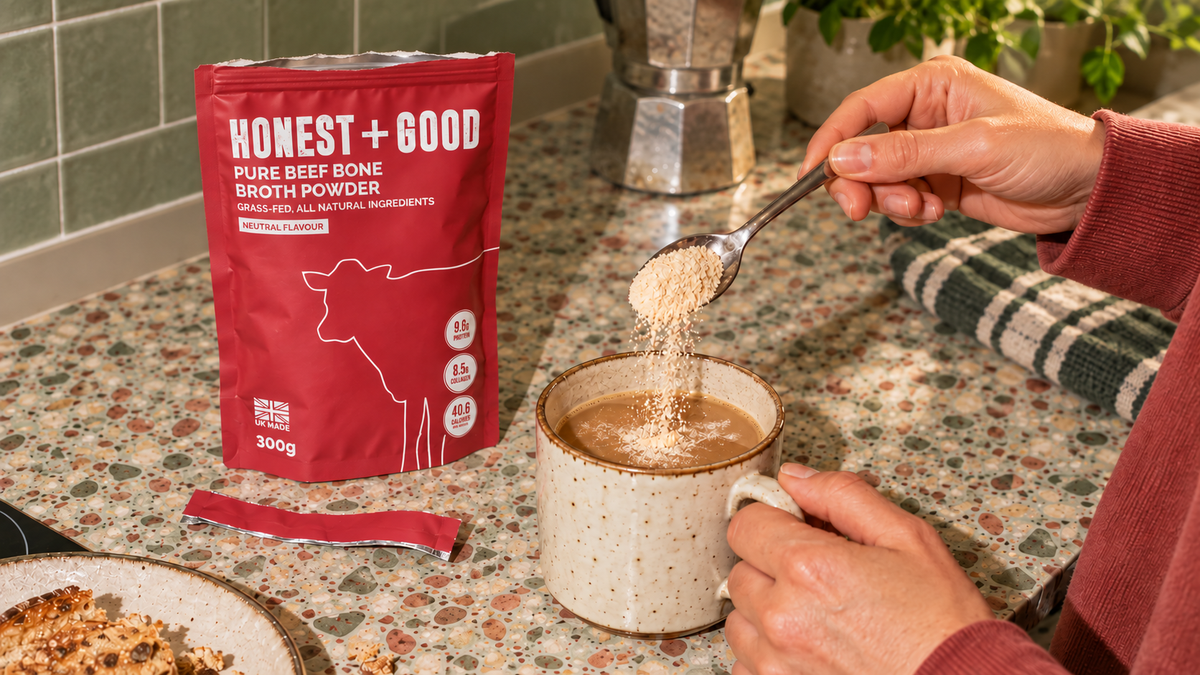
| Protein per serving | 9.6g per 10g tablespoon | about 6g to 8g per mug (a third of a 500ml carton) |
| Cost per serving | about 83p | about £1.17 to £2.33 |
Mug for mug, the powder gives you more protein for less money, and its first ingredient isn't water. The liquids come seasoned and ready to pour, and that convenience is part of what you pay for. Now do the same sum for whatever is in your cupboard.
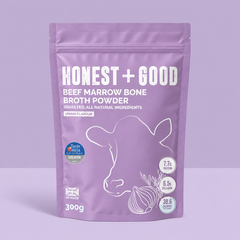
Our seasoned broths have a few more ingredients, and we list them all. Beef Marrow adds rosemary, thyme and sea salt. Chicken + Veg adds carrot, herbs and yeast extract for flavour.
What the label can't tell you
A label doesn't say how the animals were raised, how long the bones were simmered or whether the batch was tested. Those are fair questions to put to any brand.
Our answers: grass-fed beef and free-range chicken, slow-simmered, and every batch tested for heavy metals and microbiology.
A worked example
Here are two made-up bone broth powders, the kind of thing you might find side by side. Neither is a real product.
| Powder A | Powder B | |
|---|---|---|
| Front of pack | "Rich and nourishing bone broth" | "Bone broth powder" |
| Ingredients | Maltodextrin, beef bone broth powder (30%), salt, yeast extract, cornflour, flavouring, anti-caking agent | Beef bone broth (99.8%), sunflower lecithin |
| Protein per 100g | 28g | 96g |
| Serving | 10g | 10g |
| Protein per serving | 2.8g | 9.6g |
Both say "bone broth" on the front. Only the back tells you that A is mostly something else. If they cost the same, you're paying three times as much for each gram of broth in A.
Powder B is ours, as you may have guessed.
Phrases worth a second look
- "With bone broth" or "bone broth flavour". "With" can mean a little. Check the percentage in the ingredients list.
- "High in protein" next to a tiny serving. True per 100g, modest per mug.
- "Collagen" in large letters. Look for a number in milligrams or grams per serving.
- "Natural flavourings". Fine, but ask why a product made from simmered bones needs flavour added.
Thirty seconds, in order
- Flip the pack.
- Find the ingredients. Is broth first? What comes after it?
- Find protein per 100g.
- Check the serving size and work out protein per mug.
- Divide the price by the number of servings.
Do that twice and you'll never need to read a front label again.
When did you last read the back before the front?
Most of us choose in about three seconds, on a colour and a word. Brands know that. The front of a pack is built for those three seconds.
The back is where a product has to tell the truth. Which of the things in your cupboard have you never turned over?
High in protein · 300g · 30 servings · £24.99
Questions
Is a longer ingredients list always worse?
No. Herbs and vegetables make a list longer and a broth tastier. Look at what the extra ingredients are for.
Why does yours contain sunflower lecithin?
It helps the powder mix into liquid without clumping. It makes up 0.2% of the pack.
Is bone broth the same as stock?
They overlap. Bone broth is usually simmered for longer. The label checks above work for both.
Are your broths organic?
No, and we'd rather explain than dodge. Organic is a paid certification: producers pay a fee and are inspected every year to keep the logo. That is a real cost, and not every farm can afford to carry it year after year, small ones least of all. So the logo tells you something real, but it isn't the only sign of a well-raised animal. It's the same with any badge: a small producer without one can be working to standards as high as a big name with it, and sometimes higher. What we can vouch for is this: our beef is grass-fed and pasture-raised, our chicken is free-range, nothing is added to bulk the broth out, and every batch is tested for heavy metals and microbiology. If we ever certify, we'll say so. Until then we won't borrow the word.
Sources & Further Reading
- Food labelling: giving food information to consumers. GOV.UK.
- Labelling guidance for prepacked for direct sale (PPDS) food products, for ingredients listed in descending order of weight. GOV.UK.
- Regulation (EC) No 1924/2006 on nutrition and health claims made on foods, Annex. legislation.gov.uk.
- Soil Association Certification. Fees for farming and growing to Soil Association standards or organic regulations, 2026 to 2027, for the annual fee and annual inspection.
Mentioned in this guide
Add them to your basket in one tap.